There is something undeniably timeless about a varsity jacket. Think about it: whether you first fell in love with the look scrolling through vintage high school yearbooks, watching 90s teen dramas, or spotting a modern streetwear icon rocking one on Instagram, this classic piece of outerwear holds a legendary status in fashion. It is rugged, deeply nostalgic, and infinitely customizable. But if you have ever tried to track down the perfect one, you know the struggle. Walking into a regular mall store usually leaves you staring at generic, poorly fitting synthetic jackets that lose their shape after a couple of months. That is not what you are looking for.
You want a jacket with weight, heritage, and personality. You want real wool, genuine leather sleeves, crisp chenille patches, and a fit that actually flatters your build. Figuring out how to get a varsity jacket that checks every single one of those boxes—without draining your savings account or compromising on quality—takes a little bit of know-how. Let’s break down everything you need to know to score a jacket you will wear for decades.
1. Figure Out Where Your Varsity Jacket Style Comes From
Before you even look at fabric swatches or measurements, you need to understand the history and style variations of the garment itself. The varsity jacket—often called a letterman jacket—started on the baseball field at Harvard University back in 1865. Back then, players sewed a giant ‘H’ onto their thick wool sweaters to highlight star athletes. By the early 1900s, those sweaters evolved into wool-body jackets with leather sleeves designed to block out the biting New England wind during late-season games.
When you are shopping today, you generally run into three main style categories:
- The Traditional Athlete: This is the classic high school or collegiate look. It features a heavy melton wool body, genuine cowhide leather sleeves, striped rib-knit collar and cuffs, and snap-button closures. It is heavy, structured, and built to last.
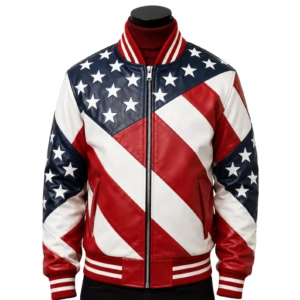
- The Modern Streetwear Edge: Streetwear culture took the traditional letterman silhouette and threw out the rulebook. Think oversized fits, bold color blocking, embroidered back graphics, mixed fabrics (like satin or denim bodies), and unconventional patches that lean into pop culture rather than sports.
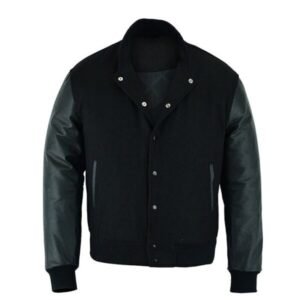
- The Sleek Minimalist: If bold colors and chenille letters aren’t your vibe, minimalist varsity jackets strip away the noise. You get a monochromatic look—all black, all navy, or charcoal grey—often pairing a wool body with matching wool or subtle matte leather sleeves for a sharp, understated aesthetic.
Knowing which camp you fall into helps you narrow down your options immediately, saving you from sorting through hundreds of styles that just aren’t you.
2. Choose Your Materials Wisely (Don’t Fall for Cheap Synthetics)
The single biggest mistake people make when buying a varsity jacket is ignoring material composition. If a jacket costs forty dollars online, there is a 99% chance it is made from cheap acrylic wool and polyurethane (“pleather”) sleeves that will crack, peel, and smell weird the first time you get caught in the rain.
If you want a jacket that ages like fine wine—developing creases, softening up, and molding to your body over time—you have to pay attention to the spec sheet:
- The Body: Look for Melton Wool (usually an 80% wool and 20% nylon blend for structural durability) or heavy-duty boiled wool. It should feel thick, dense, and heavy in your hands. A good wool body keeps you warm on chilly autumn nights and holds its shape year after year.
- The Sleeves: Premium jackets use genuine cowhide leather or supple sheepskin leather. Cowhide is stiff at first but breaks in beautifully, becoming butter-soft after a few months of wear. Sheepskin is soft right out of the box. Avoid synthetic leather unless you are strictly looking for a vegan alternative, but even then, seek out high-grade faux leather with reinforced backing.
- The Lining: A cheap nylon lining will make you sweat. Look for quilted satin or polyester inner linings with light insulation. It makes sliding the jacket on and off over hoodies or sweaters effortless while adding an extra layer of cozy warmth.
- The Ribbing: The collar, cuffs, and hem should feature tight, high-quality acrylic or wool-blend knit ribbing with good “memory”—meaning when you stretch it, it snaps right back into place instead of getting loose and wavy.
3. Decide: Off-the-Rack vs. Fully Custom
Once you know what materials to look for, you face the ultimate fork in the road: do you buy a pre-made jacket off the rack, or do you design a custom piece from scratch?
Off-the-rack jackets are great if you find a vintage piece at a thrift store that fits you like a glove, or if you spot a retail brand with a colorway that speaks to you. However, thrifting is a game of pure luck—you might search for weeks and never find your size or preferred color combination. Furthermore, mass-market retail jackets rarely allow you to swap out colors or add personal touches.
This is why going the custom route has exploded in popularity. Designing your own jacket lets you take total control of the creative process. You get to pick your exact body color, sleeve color, button finish, pocket piping, inner lining, and personal embroidery. Whether you want to rep your hometown, your brand, your favorite colors, or your own initials, building your own jacket ensures you end up with a 1-of-1 wearable masterpiece that nobody else on earth owns.
4. Mastering Your Measurements for the Perfect Fit
Nothing ruins a great jacket faster than a sloppy fit. Varsity jackets have a distinct silhouette: they are designed to sit right at the waist with a blouson body and structured shoulders. If it is too long, it looks like a coat; if it is too tight, you won’t be able to layer your favorite hoodies underneath.
When figuring out how to get a varsity jacket that fits properly, grab a flexible tape measure and check these key areas:
- Chest Width: Measure across the widest part of your chest, right under the armpits. Remember to account for whether you plan to wear thick sweaters or hoodies underneath. If you like a relaxed, modern streetwear drape, sizing up is usually the safest bet.
- Sleeve Length: A classic varsity sleeve should end right at your wrist bone, allowing your shirt cuff or watch to peek through slightly. Pay close attention to shoulder seams—they should sit right on the edge of your natural shoulder bone, not halfway down your arm.
- Overall Body Length: Traditional letterman jackets are cropped shorter than standard parkas or windbreakers, usually ending right at the belt line. This keeps the silhouette sharp and prevents the jacket from bunching up when you sit down.
5. Crafting Your Custom Design: Colors, Patches, and Embroidery
If you choose to design your own jacket, half the fun is bringing your vision to life. But with total creative freedom comes the danger of overcomplicating things. To keep your jacket looking sophisticated rather than chaotic, follow a few simple design rules.
First, stick to a cohesive color palette. Two or three colors max will keep your design clean. Classic combinations—like forest green and cream, all-black with white leather, or navy blue and gold—always look sharp because they are grounded in heritage athletic wear.
Second, think carefully about patches and embroidery. Chenille letters with felt borders give that authentic vintage texture, while crisp direct embroidery works best for names, dates, or subtle chest logos. Place bold graphics on the back, keep left-chest embroidery minimal, and let the quality of the wool and leather speak for itself.
Ready to Create Your Dream Jacket?
Skip the generic mall finds and design a piece that is entirely yours. Choose your wool colors, select genuine leather sleeves, add custom chenille patches, and get premium craftsmanship delivered straight to your door.
6. Caring for Your Varsity Jacket So It Lasts a Lifetime
Once your jacket arrives and you break it in, you want to protect your investment. Because varsity jackets combine two very different materials—wool and leather—you cannot simply toss them into a standard washing machine.
Wool bodies require gentle care. If you get a small stain on the wool, spot-clean it immediately with a damp cloth and mild detergent. For deeper cleanings, take your jacket to a professional dry cleaner who specializes in leather and suede care, as standard cleaners can strip the natural oils from the leather sleeves.
Speaking of leather sleeves, conditioning is key. Once or twice a year, treat the leather with a quality leather conditioner or balm to keep it supple and prevent cracking. Store your jacket on a wide, sturdy wooden hanger in a cool, dry place away from direct sunlight, and never pack it away in a plastic garment bag where moisture can get trapped.
By following these steps—understanding the styles, demanding quality materials, nailing your fit, and maintaining the garment—you won’t just know how to get a varsity jacket. You’ll own a standout staple piece that defines your personal style for years to come.
Frequently Asked Questions
What materials are used to make a high-quality varsity jacket?
The gold standard for a traditional varsity jacket is a heavy melton wool body paired with genuine cowhide or sheepskin leather sleeves. The inner lining should be quilted satin for comfort and warmth, and the collar, cuffs, and waistband should feature tight, high-retention knit ribbing.
How should a varsity jacket fit?
A classic varsity jacket should fit snugly across the chest and shoulders, with the shoulder seams sitting right on your natural shoulder line. The body length should be cropped, ending right around your belt line, and the sleeves should hit precisely at your wrist bone. If you prefer a modern, oversized streetwear look, consider sizing up.
Can I customize the colors, letters, and patches on my jacket?
Yes! When ordering a custom varsity jacket, you have full control over almost every detail. You can choose the exact body and sleeve colors, pick snap button finishes, add personalized chenille letters, and include custom embroidery on the chest, sleeves, or back.
How long does it take to get a custom varsity jacket delivered?
Because custom jackets are handcrafted individually to your exact measurements, color choices, and embroidery specifications, production and delivery typically take anywhere from 2 to 4 weeks. This ensures every stitch, patch, and seam meets top-tier quality standards before it arrives at your doorstep.